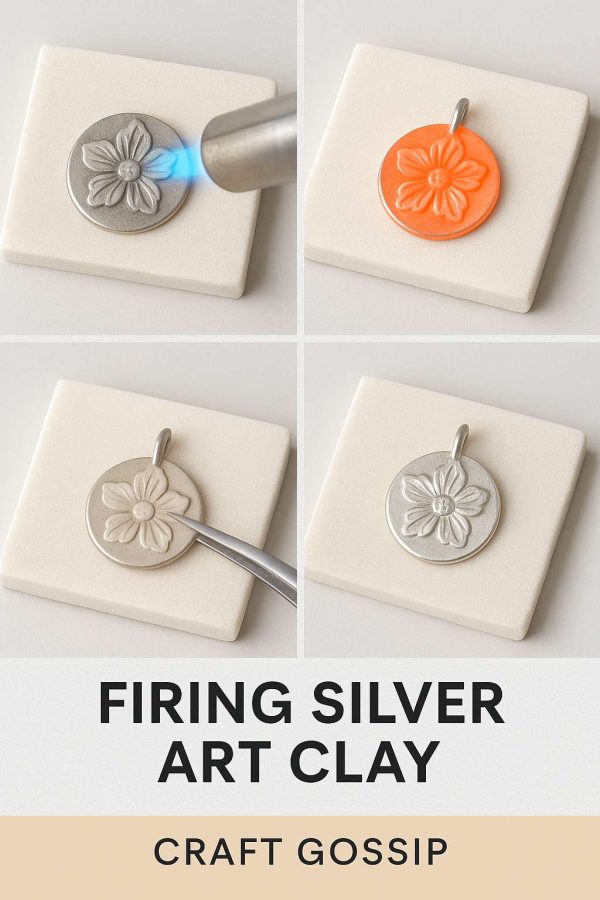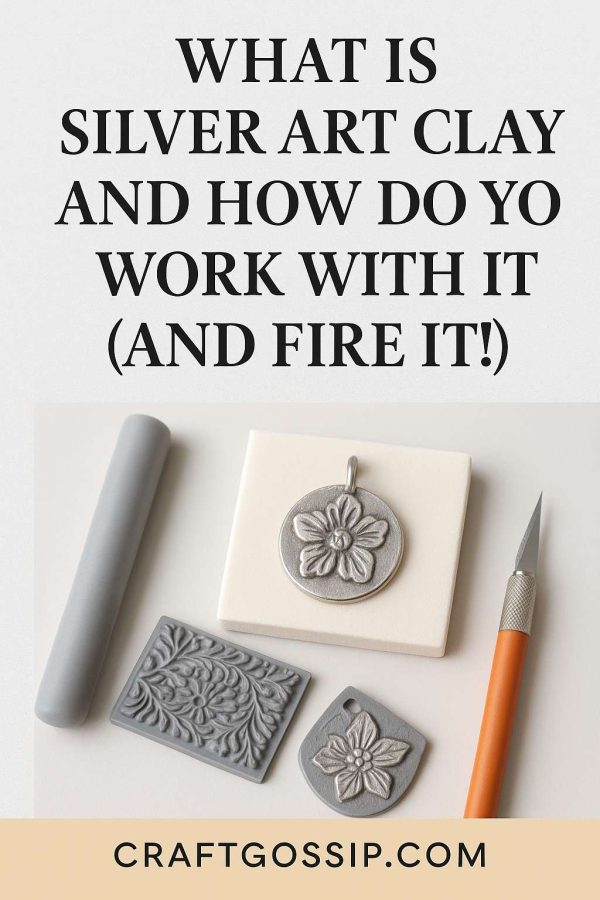
If you’ve ever dreamed of making real silver jewelry at home—without the need for a silversmith’s workshop—silver art clay or precious metal clay (PMC) might just be your new best friend. It looks like clay, feels like clay, and shapes like clay, but when you fire it, the binder burns away and what’s left is pure, solid silver. Magical, right?
This material has completely changed the way hobby jewelers and crafters approach metalwork. Instead of melting silver with a torch and hammering it into submission, you can roll, stamp, carve, and mold it just like pottery clay. Let’s walk through exactly what it is, how to use it, and the different ways you can fire it.
What is Silver Art Clay?
Silver art clay (also called precious metal clay or PMC) is a soft, moldable clay made of three parts:
- Fine particles of pure silver
- A non-toxic organic binder
- A bit of water
That mix gives you a squishy clay you can roll, cut, and sculpt into jewelry pieces, charms, pendants, or even small keepsakes. Once it’s dried and fired, you’re left with a piece that’s typically 99.9% pure fine silver—sometimes called “fine silver” or .999 silver.
Tools and Materials You’ll Need
Working with silver clay is much simpler than traditional silversmithing, but a few basic tools make it easier:
- Clay roller (or a simple acrylic rolling pin)
- Textured stamps or mats for impressions
- Craft knife or clay cutters
- Sandpaper or files (for cleaning up edges)
- Water and small brush (to smooth cracks)
- Work surface like a Teflon or silicone mat
- Firing method (kiln, torch, or stovetop burner depending on the clay brand)
How to Work with Silver Art Clay
- Condition the clay – Silver clay dries out fast, so keep it wrapped or sealed until you’re ready. If it feels stiff, a touch of water and kneading will soften it.
- Shape and design – Roll it flat for pendants, cut out shapes with cutters, or press stamps into it for texture. You can even sculpt tiny figures or mold it around objects.
- Dry it thoroughly – Before firing, your piece must be bone-dry. Air-dry it for at least 24 hours, or speed things up with a hair dryer or a special dehydrator.
- Refine – Once dry, sand edges smooth, carve details, or patch cracks with a clay slip (a watery mix of clay).
How to Fire Silver Art Clay
Here’s where the “magic” happens—turning clay into solid silver. There are three main ways to do it:
1. Kiln Firing
- Best for larger or thicker pieces.
- Heats evenly and ensures maximum strength.
- Fire at around 1650°F (900°C) for 30–60 minutes depending on clay brand.
2. Torch Firing
- Perfect for small pendants, charms, or earrings.
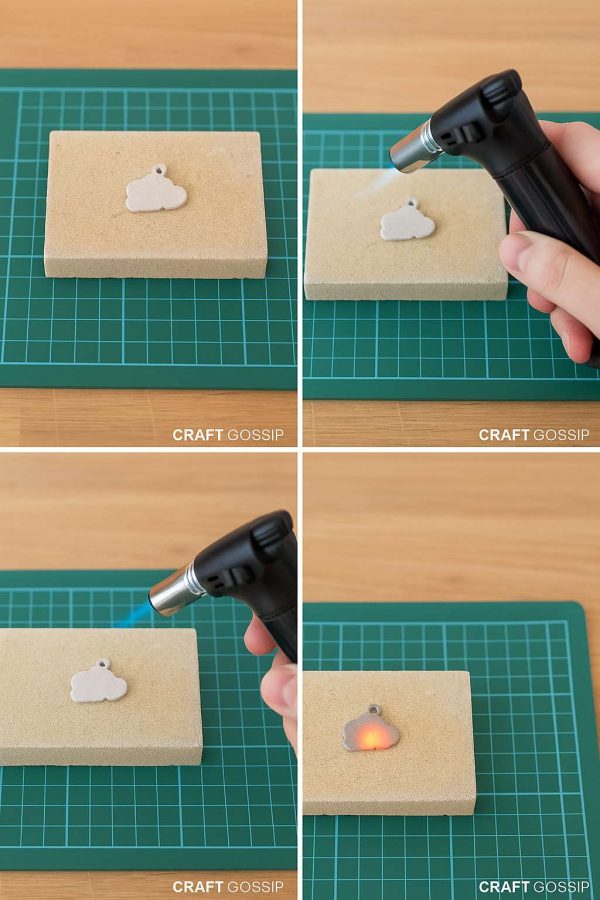
- Place your piece on a fireproof brick and use a butane torch.
- Heat until it glows a peachy orange for 2–5 minutes. Once the binder burns off, you’re left with silver.
3. Gas Stove Firing (for certain low-fire clays)
- Place on a mesh screen over a gas hob.
- Heat until the binder burns away, usually 5–10 minutes.
- Not as strong as kiln firing but works for hobby pieces.
After Firing: Polishing and Finishing
Once fired, your piece will look white and matte. That’s the silver particles fused together. From here, you can:
- Brush with a brass or steel brush for a soft shine.
- Tumble-polish for a mirror finish.
- Patina with liver of sulfur for depth and contrast.
- Drill holes, attach jump rings, or add beads and stones.
Tips for Beginners
- Work in small sessions—silver clay dries quickly!
- Keep a little water pot handy to rehydrate edges.
- Practice on small charms before tackling a big statement pendant.
- Save scraps! You can rehydrate dried clay with a drop of water.
Why Crafters Love It
Silver art clay lets you create heirloom-quality jewelry right at your kitchen table. It’s forgiving enough for beginners but versatile enough for serious jewelry makers. From textured pendants to dainty rings, the possibilities are endless—and every piece you fire feels like uncovering treasure.