Pottery is one of those crafts where the language sounds just as creative as the projects themselves. Walk into a studio and you’ll hear talk of “leather-hard clay,” “throwing on the wheel,” or “cone 6,” and if you’re new, it’s easy to feel lost. Think of this guide as your pottery dictionary — a cheat sheet for decoding all those wonderful clay terms so you can feel right at home in the studio.
Clay & Materials
Clay Body – The recipe of clay you’re working with. Some are smooth (porcelain), some gritty (stoneware), and some low-fire (earthenware). Each body acts differently in your hands and in the kiln.
Slip – A creamy liquid version of clay. Used like glue for joining pieces or painted on for decoration.
Engobe – Similar to slip, but usually colored with oxides or stains and used for surface decoration.
Grog – Tiny gritty bits of fired clay mixed back into clay. Adds strength, reduces shrinkage, and gives texture.
Plasticity – How bendy and workable your clay is. Porcelain = very plastic, earthenware = less so.
Shrinkage – Clay shrinks as it dries and again when fired. Planning ahead is key so your “mug” doesn’t end up shot glass-sized.
Handbuilding Terms
Pinch Pot – Formed simply by pinching clay between your fingers. A beginner’s go-to.
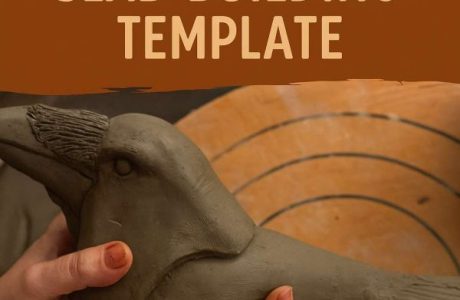
Coil – Rolled clay “snakes” stacked and smoothed into shapes. Great for big pots or decorative pieces.
Slab – Flat rolled sheets of clay cut, draped, or joined into shapes like trays, tiles, or mugs.
Score & Slip – The classic method for joining two clay pieces: scratch both surfaces (score), then glue with slip.
Additive / Subtractive – Ways of working with clay surfaces. Additive = adding clay. Subtractive = carving or removing clay.
Wheel Work
Centering – Forcing clay to the exact middle of the wheel so it spins evenly. Essential for anything round.
Throwing – Shaping clay on the wheel. (No actual throwing involved!)
Pulling – Lifting the clay walls upward with steady hands.
Collaring – Using your hands to squeeze clay inward as it spins, narrowing the form.
Opening Up – Pressing into the centered lump of clay to start creating the hollow inside.
Bat – A removable flat disk that attaches to the wheel head. Lets you lift your piece off without squishing it.
Drying Stages
Plastic – Fresh, squishy clay you can shape and bend.
Leather-Hard – Halfway dry. Firm enough to hold its shape, soft enough to carve or attach handles.
Bone Dry – Fully dry, chalky clay. Ready for the kiln, but fragile as a biscuit.
Greenware – Any unfired clay piece, whether leather-hard or bone dry.
Firing Terms
Bisque Firing – The first firing. It turns clay into a permanent ceramic, but leaves it porous for glazing.
Glaze Firing – The second firing that melts glaze into a glassy finish.
Cone – A reference point for kiln temperature. Cones bend at specific heats, and potters say things like “fired to cone 6.”
Pyrometric Cone – Little triangular markers used to measure kiln heat work (temperature + time).
Oxidation vs. Reduction – Firing atmospheres. Oxidation = plenty of oxygen (electric kiln). Reduction = limited oxygen (gas/wood kiln), which changes glaze colors dramatically.
Thermal Shock – When clay cracks from sudden temperature change. (Think of a mug exploding if you pour boiling water into cold, porous bisque.)
Surface Decoration
Underglaze – Colored decoration applied before a clear glaze. Works like paint but survives firing.
Glaze – A glassy, melted coating that adds color and finish. Comes in glossy, matte, satin, transparent, or opaque.
Oxides & Stains – Minerals (like iron oxide or cobalt) brushed on for color and detail.
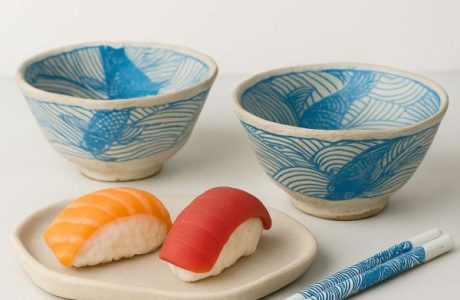
Sgraffito – Carving through a colored slip or underglaze to reveal the clay body beneath.
Mishima / Inlay – Filling carved lines with contrasting colored slip. Gorgeous and precise.
Wax Resist – Wax applied to clay before glazing so glaze won’t stick there (used for patterns or to keep the bottom clean).
Burnishing – Polishing leather-hard clay with a stone or spoon for a smooth, shiny surface without glaze.
Studio Tools & Extras
Rib – A flat tool (wood, metal, rubber) for smoothing, shaping, or scraping.
Loop Tool – A tool with a looped wire end for trimming or carving.
Needle Tool – A sharp, pointed tool for piercing air bubbles, checking thickness, or carving.
Calipers – Measuring tools to make lids fit pots or ensure uniform sizes.
Glaze Test Tile – Small clay samples used to test glaze colors. Trust me, the wet glaze never looks like the fired result.
Bat Pin Holes – The little holes in your wheel head that hold bats in place.
Common Studio Slang
Potter’s Wheel Headache – That ache in your arms and shoulders after your first class.
Clay Memory – Clay “remembers” how it was handled. If twisted, it can warp in the kiln.
Kiln Gods – The good-luck charms potters jokingly call on, because sometimes firings surprise you — in both wonderful and disastrous ways.
Pottery Orphans – Abandoned pots in the back of a communal studio that no one claims.
Why Lingo Matters
Learning pottery lingo isn’t just about sounding clever — it helps you understand instructions, troubleshoot mistakes, and bond with fellow potters. Once you know your leather-hard from your bone dry and your bisque from your glaze fire, you’ll feel like you belong in the studio. And honestly, half the fun of pottery is that you always keep learning new words, new techniques, and new ways to get gloriously muddy.