• Home
  • Suggest A DIY
  • DIY Newsletter

Polymer Clay

Fimo and clay tips and tutorials

  • About CraftGossip
  • Our Network
    • Bath & Body Crafts
    • Candle Making Ideas
    • Crochet Ideas
    • Cross Stitch
    • Edible Crafts
    • Felting Patterns
    • Glass Art
    • Home & Garden Ideas
    • Indie Crafts
    • Jewelry Making
    • Kids Crafts
    • Knitting Patterns
    • Lesson Plans
    • Needlework
    • Party Ideas
    • Polymer Clay
    • Quilting Ideas
    • Recycled Crafts
    • Scrapbooking
    • Sewing Patterns
    • Card Making
    • DIY Weddings
    • Not Craft Ideas
  • Giveaways
  • Roundups
  • Store
  • Search

Mokume gane pendants

August 28, 2008 by Wendy

Wendy\'s mokume gane attemptOkay, so I had a little camera trouble, yesterday. The batteries were dead, so of course I had to charge them. Well, better late than never!

These are the pedants I made using the mokume gane technique I talked about in my last post. I still need to do the sanding and buffing on them, but all in all they turned out pretty good for it to be my second attempt. Of course, I did my studying of a lot of other artist’s work and tutorials before I tried it again.

I used 3 different sizes of square clay cutters and a “rake” from a Zen garden! You can use almost anything to make your patterns in the clay. I have heard of people using magic marker caps, screwdrivers, forks, texture sheets, leather tools, almost anything and everything else!

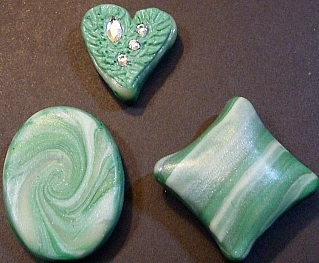
The picture below is of the pendants I made using the leftover clay from the mokume stack I made. So, even if your experimenting turns out not to be what you were hoping for, smoosh the clay up (yes, that’s a technical term) and make swirlies or run it through the pasta machine to see what kind of pattern you get from that so you can make some striped pillow beads. They are as easy as pie! Then again, you can mix the clay completely until you have another color to start over with. Good luck!
[tags]polymer clay, mokume gane, polymer clay pendants, polymer clay tutorials, show and tell[/tags]

Looking for more polymer clay texture tools? Check these out on Amazon.

«
»

Comments

  1. Svetoslav says

    February 9, 2010 at 5:51 am

    looking great – how exactly do you get these squar shapes + circles to appear on your pedants????

  2. Sharon Herbst says

    May 22, 2010 at 8:12 pm

    same question. how do you get the square shapes and circles to appear on your pendants

Have you read?

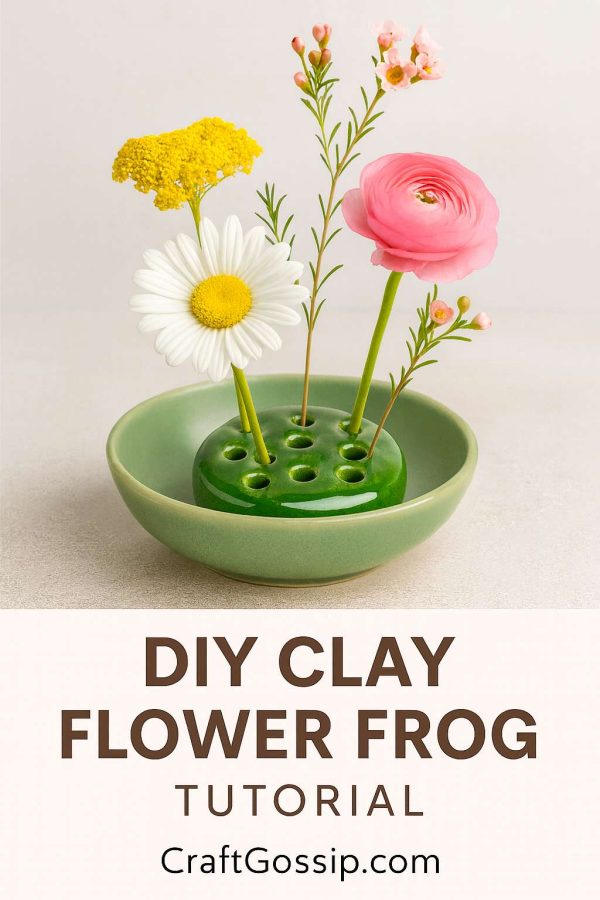
DIY Clay Flower Frog Tutorial – A Handmade Tool for Arranging Blooms

If you’ve ever struggled to get your flowers to stand just right in a vase, let me introduce you to one of the most charming old-fashioned tools around: the flower frog. Traditionally made from metal or glass, a flower frog is simply a base with holes that keeps stems in place so you can create balanced, natural arrangements without fussing. Today, we’re giving this vintage idea a modern twist by making a clay flower frog with our own hands.

This project is wonderfully simple, yet it creates something you’ll use again and again – especially if you love bringing fresh blooms inside from the garden. It’s also a fantastic beginner-friendly clay project that gives you a chance to practice shaping and smoothing without needing advanced pottery skills.

Materials You’ll Need

  • Pottery clay (stoneware or earthenware works well; you can also use air-dry clay for a decorative-only version)

  • A rolling pin or clay roller

  • A needle tool or skewer

  • A small round cookie cutter or cup for shaping

  • Sponge and water for smoothing

  • Optional: glaze in your favorite color (if kiln-firing) or acrylic paint/sealer for air-dry clay

Step-by-Step Tutorial

Step 1: Prepare Your Clay

Wedge your clay (fancy potter’s word for kneading out the air bubbles) until smooth. Roll it out to about 1 inch thick – thick enough that your holes won’t weaken the structure.

Step 2: Cut the Base Shape

Using a cookie cutter, cup, or template, cut out a circle or oval about 3–4 inches across. This will form the base of your flower frog. Smooth the edges with a damp sponge.

Step 3: Add the Holes

Use a skewer, chopstick, or needle tool to pierce holes across the surface. Space them evenly but not too close to the edges. Aim for around 6–10 holes, depending on the size of your frog. Make sure the holes go all the way through so stems can slide in easily.

Step 4: Refine and Smooth

Dip your tool in water and smooth around each hole to prevent cracking later. Take your time here—neat holes are what make your frog functional and pretty.

Step 5: Let It Dry

  • For kiln clay: Allow to dry until bone dry, then bisque fire. Apply glaze of choice and fire again.

  • For air-dry clay: Let it cure completely according to the package instructions, usually 24–48 hours.

Step 6: Finish and Seal

  • If you’re kiln-firing, this is where you’ll add that glossy glaze – think celadon green, soft blue, or speckled neutrals.

  • If you’re using air-dry clay, paint with acrylics and add a clear sealer to protect it from water.

Using Your Clay Flower Frog

Place your finished frog at the bottom of a shallow bowl or vase, add water, and start threading flower stems through the holes. The frog will hold them upright and let you create that lush, organic look without fuss. For a more rustic style, leave the clay unglazed (just make sure it’s still sealed if you’ll be adding water).

Variations to Try

  • Mini Frogs: Make smaller versions for teacups or bud vases.

  • Square or Oval Shapes: Who says flower frogs have to be round?

  • Decorative Impressions: Press lace, leaves, or stamps into the clay before making the holes for a bit of texture.

  • Stacked Frogs: Make two thinner discs and stack them together for a taller look.

Why You’ll Love This Project

Not only do you get a handmade, functional tool, but you’re also keeping alive a vintage floral tradition. These little clay flower frogs make beautiful gifts, especially paired with a thrifted vase and a bunch of fresh-picked blooms.


Categories

air dry clay animals Artist Spotlight Christmas Clay Canes Clay Charms Craft Inspirations DIY Clay Tutorials and Patterns earrings Freebies halloween Inspiration necklace Plates, Bowls & Platters Polymer Clay Polymer Clay - Techniques Polymer Clay - Tutorials Polymer Clay Community Tips/Tools valentine's day

RSS feed: More Articles More Articles

  • Knit a Leopard Print Shawl and Learn about Yarn Substitution
  • DIY Mini Cotton Bag Ghosts: Easy No-Sew Halloween Decorations
  • 3 Free DMC Nutcracker Embroidery Patterns for a Beautiful Christmas Table
  • 23 FREE Peeking Dog SVG Cut Files
  • Easy Aperol Spritz Recipe: A Classic Cocktail With Just 3 Ingredients
  • Cat-O-Lantern Quilt Pattern Review: A Cute Halloween Quilt for Cat Lovers
  • Shock Wave Free Crochet Lap Blanket Pattern
  • DIY Halloween Glass Platters With Fabric: An Easy Reverse Decoupage Tutorial
  • 14 Lazy Keto Meals for Busy Nights: Easy Low-Carb Dinners Without the Fuss
  • Books to Read for Dia de Los Muertos

Pick Your Blog

  • Sewing
  • Knitting
  • Quilting
  • Crochet
  • Home & Garden
  • Recycled Crafts
  • Scrapbooking
  • Card Making
  • Polymer Clay
  • Cross-Stitch
  • Edible Crafts
  • Felting
  • Glass Art
  • Indie Crafts
  • Kids Crafts
  • Jewelry Making
  • Lesson Plans
  • Needlework
  • Bath & Body
  • Party Ideas
  • Candle Making
  • DIY Weddings
  • Not Craft
  • Free Craft Projects

Copyright © 2026 · CraftGossip | Start Here | Contact Us | Link to Us | Your Editors | Privacy and affiliate policy