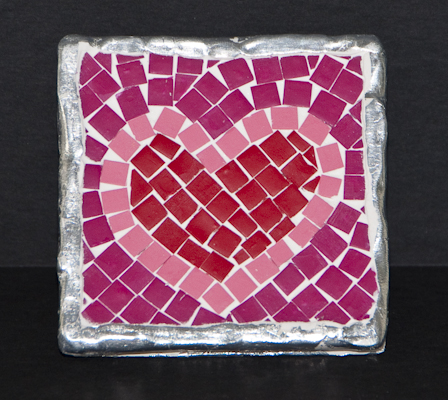
Ginger Burrell generously offers a tutorial for creating a handmade book complete with a polymer clay cover. The heart mosaic design makes it perfect for a Valentine’s Day gift but as she points out, you could use any motif you’d like.
Fimo and clay tips and tutorials
Ginger Burrell generously offers a tutorial for creating a handmade book complete with a polymer clay cover. The heart mosaic design makes it perfect for a Valentine’s Day gift but as she points out, you could use any motif you’d like.
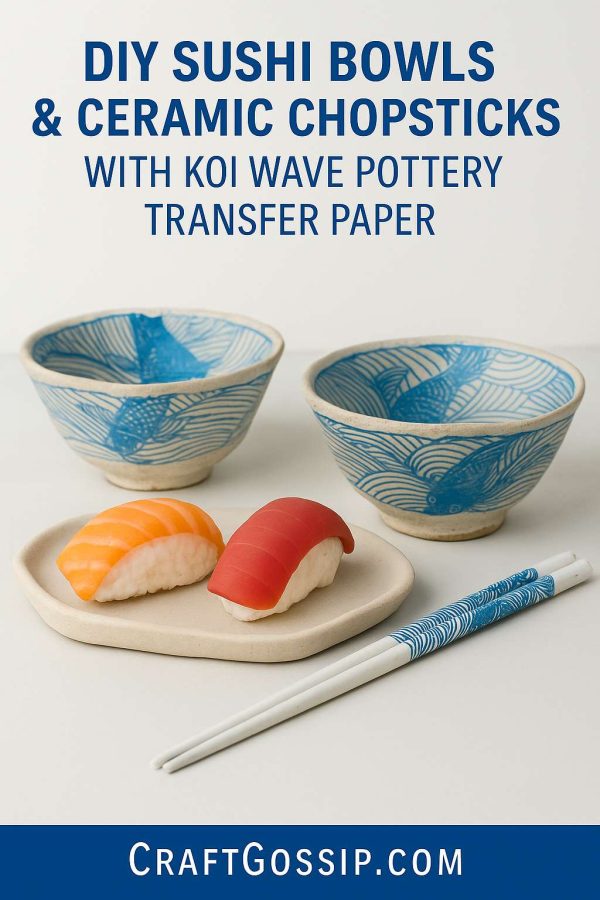
If you’ve ever wanted to bring a touch of Japanese artistry to your tableware, this project is the perfect place to start. Using koi wave pottery transfer paper, you can transform plain clay pieces into elegant sushi bowls and matching ceramic chopsticks—handmade, functional, and beautiful.
This beginner-friendly guide will show you how to apply ceramic transfer sheets to create a set that looks store-bought but carries the warmth of handmade craftsmanship.
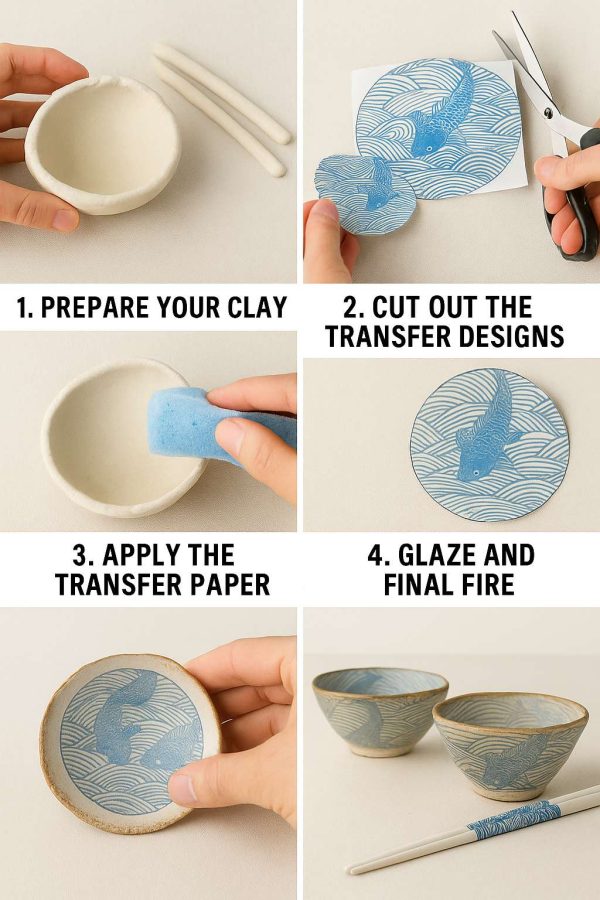
Let all pieces firm up to leather-hard stage—firm but still damp enough to accept transfers.
Trim sections of the koi wave transfer paper to fit your pieces. For bowls, you can cut circular panels or strips depending on whether you want the design inside, outside, or both. For chopsticks, cut narrow strips of transfer paper that can wrap around each stick.
Tip: Think about placement—the flowing wave design looks especially striking when it wraps around curved surfaces.
Repeat until all bowls and chopsticks are decorated.
Allow all pieces to dry completely. Bisque fire according to your clay’s temperature guidelines (usually cone 04 for bisque). This firing will lock in the koi wave design.
Brush or dip in a clear glaze to seal the transfers, bringing out the rich blue detail while keeping the white clay background crisp. Fire to your glaze cone temperature (typically cone 5–6).
You’ll have a handmade sushi set featuring:
This koi wave pattern brings both serenity and elegance to your handmade ceramics. The deep blue waves paired with koi fish designs make each piece feel timeless—perfect for special meals, gifting, or even selling as artisan tableware.
Creating your own sushi set allows you to blend functionality with artistry—every bite of sushi becomes part of a beautiful, handmade ritual.