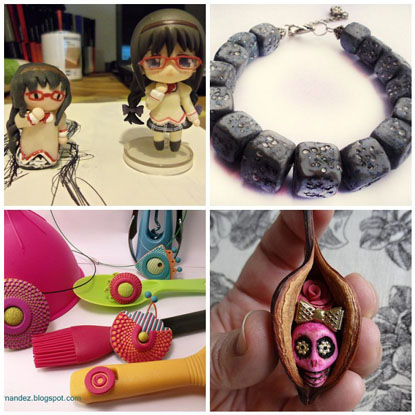
Fan picks, bright colours, great textures and interesting images. Basically, polymer clay peeps are super creative.
1. Homura-chan, 2. Bones, 3. Curs Fabi inspiració marina, 4. Skull Pod necklace – Reya

Fimo and clay tips and tutorials

Fan picks, bright colours, great textures and interesting images. Basically, polymer clay peeps are super creative.
1. Homura-chan, 2. Bones, 3. Curs Fabi inspiració marina, 4. Skull Pod necklace – Reya

If you’ve ever fallen down a late-night Pinterest rabbit hole, you’ve probably seen someone suggest boiling polymer clay instead of baking it. At first glance, it sounds clever—no oven needed, just a pot of water and a stove. But does it really work? And more importantly, is it safe?
As someone who’s been working with clay for years (and ruined a few projects along the way), I can tell you that boiling polymer clay is one of those persistent myths that refuses to die. Let’s break it down, look at what really happens when you boil polymer clay, and explore the right ways to cure your clay projects.
Polymer clay isn’t like traditional pottery clay that hardens in a kiln, nor is it like homemade playdough that dries out with air. It’s made of PVC particles and plasticizers—and those ingredients need consistent, controlled heat to fuse together.
Boiling water only reaches 212°F (100°C)—far below what polymer clay requires. That’s the first red flag.
So let’s say you drop that cute little charm into boiling water. Here’s what you can expect:
Bottom line? Boiling leaves you with fragile, disappointing results.
Here’s a handy chart you can pin or save:
| Method | Temperature | Strength & Durability | Risks | Best For |
| Boiling Polymer Clay | 212°F (100°C) | Weak, brittle, cracks easily | Warping, sticky residue, not fully cured | Not recommended |
| Baking Polymer Clay | 265–275°F (129–135°C) | Strong, flexible, long-lasting | Can scorch if overheated | Jewelry, ornaments, figurines |
| Air Dry Clay | Room temp | Light but fragile; not waterproof | Cracking if dried too fast | Kids’ crafts, décor, lightweight projects |
It’s easy to see where the confusion starts:
Polymer clay often gets lumped in with these clays, but it plays by a completely different rulebook.
Some crafters hesitate to bake clay in the same oven they cook dinner in. Totally understandable! Luckily, there are safe alternatives:
A tabletop toaster oven is a crafter’s best friend. Small, cheap, and just the right size for jewelry, beads, and figurines. Just pop an oven thermometer inside to keep things accurate.
Some craft brands sell little ovens designed just for polymer clay. They’re not essential, but they give peace of mind if you worry about fumes in your main oven.
These work for small flat pieces (like earrings) but require a careful hand—hold it too long and you’ll scorch the clay.
If you really don’t want to bake at all, switch to air dry clay. It hardens on its own (no oven required), though it won’t be as durable or waterproof as polymer clay.
If the oven still makes you nervous, here’s how to bake with confidence:
Done right, polymer clay is perfectly safe to cure in a home oven.
Q: Can I boil clay jewelry like beads or pendants?
Nope! They’ll be weak, crumbly, and won’t last. Stick with baking.
Q: Is it dangerous to boil polymer clay?
It won’t explode, but it can release residue and ruin your pot. Save your cookware for cooking, not crafts.
Q: Can I microwave polymer clay?
No. Microwaving polymer clay doesn’t cure it—it just overheats it unevenly, often burning the surface while leaving the inside raw.
Q: What if I only have air dry clay?
That’s fine! Just remember it’s not the same as polymer clay. It won’t be waterproof or as strong but works beautifully for lightweight crafts.
So, can you boil polymer clay? Technically, yes—you can dunk it in a pot of water. But should you? Absolutely not. Boiling doesn’t cure it properly, leaves your creations fragile, and can ruin all the hard work you put into shaping, texturing, and designing.
If you want long-lasting jewelry, ornaments, and keepsakes, baking is the way to go. And if you’d rather avoid baking altogether, explore air dry clays or cold porcelain—clays designed for that style of crafting.
Give your clay creations the proper heat treatment they deserve, and they’ll reward you with years of beauty and strength.
