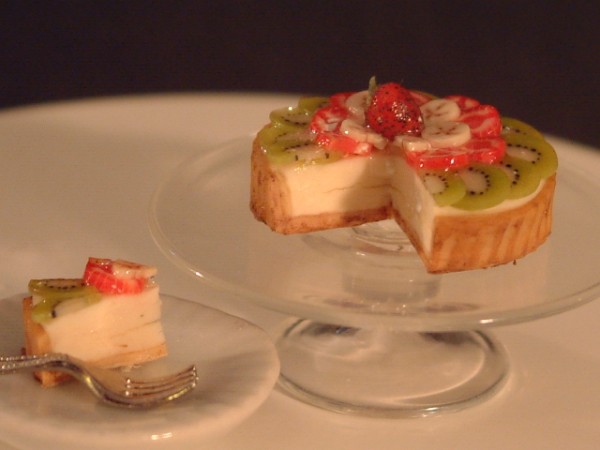
Now here’s a miniature cheesecake to put on yesterdays bistro table. You can find many other miniatures tutorials on Christel Jensen’s site including one on how to make the perfect doily for under that cheesecake.
Fimo and clay tips and tutorials
Now here’s a miniature cheesecake to put on yesterdays bistro table. You can find many other miniatures tutorials on Christel Jensen’s site including one on how to make the perfect doily for under that cheesecake.
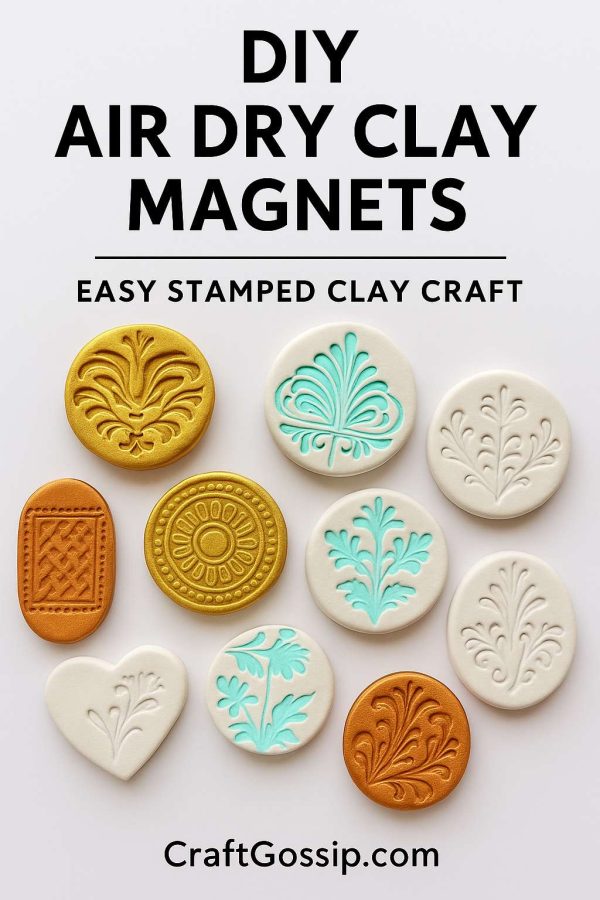
There’s something wonderfully nostalgic about clay crafts, isn’t there? The cool, smooth texture in your hands, the way it slowly transforms with just a little pressure and imagination—it’s both soothing and creative. Today, we’re making DIY air dry clay magnets that are stamped, painted, and perfect for adding a handmade touch to your fridge or craft room.
This project is simple, relaxing, and looks far more “designer” than it really is. Think of it as pottery without the kiln—no fancy equipment needed!
Start with a small ball of clay and roll it out to about ¼ inch thick. Not too thin, or it’ll crack while drying, and not too chunky, or your magnets will be too heavy.
Press your chosen rubber stamp or textured object firmly into the clay. Don’t worry about perfection—slight variations give that handmade charm.
Tip: If you’re using an ink pad, you can ink the stamp before pressing to add instant color to the impression.
Use a cookie cutter, jar lid, or knife to cut neat circles (or any shape you like—hearts, squares, even freeform ovals).
Gently smooth the edges with damp fingers or a bit of water. This gives a polished finish.
Place your pieces on baking paper and allow them to dry for 24–48 hours. Flip halfway through to prevent curling.
Once dry, you can leave them natural or lightly brush paint over the raised designs to highlight the texture. Metallics (gold, silver, copper) look stunning, but even soft pastels give a pretty effect.
If you want extra durability, brush on a thin coat of Mod Podge or varnish.
Finally, glue a magnet to the back of each piece. Let the glue cure fully before sticking them on your fridge.
These don’t just work as magnets—you can glue them onto gift tags, turn them into brooches, or even make them into pendants for necklaces. Once you start, you’ll be stamping everything in sight (don’t say I didn’t warn you!).
Handmade doesn’t have to be complicated or expensive. These DIY air dry clay magnets prove just that—simple materials, a little creativity, and you’ve got a set of unique, functional mini artworks. Perfect for gifting, decorating, or just adding a bit of joy to the everyday.