• Home
  • Suggest A DIY
  • DIY Newsletter

Polymer Clay

Fimo and clay tips and tutorials

  • About CraftGossip
  • Our Network
    • Bath & Body Crafts
    • Candle Making Ideas
    • Crochet Ideas
    • Cross Stitch
    • Edible Crafts
    • Felting Patterns
    • Glass Art
    • Home & Garden Ideas
    • Indie Crafts
    • Jewelry Making
    • Kids Crafts
    • Knitting Patterns
    • Lesson Plans
    • Needlework
    • Party Ideas
    • Polymer Clay
    • Quilting Ideas
    • Recycled Crafts
    • Scrapbooking
    • Sewing Patterns
    • Card Making
    • DIY Weddings
    • Not Craft Ideas
  • Giveaways
  • Roundups
  • Store
  • Search

Etsy Feature – KEOKER Polymer Clay Earring Drill Guide

January 25, 2026 by Shellie Wilson

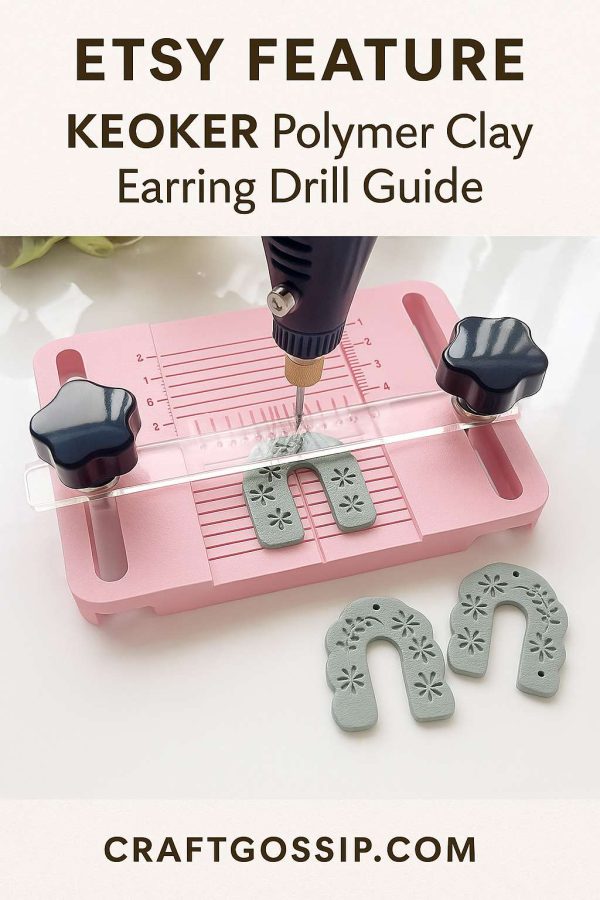
If you’ve ever made polymer clay earrings, you’ll know the struggle: finishing a gorgeous pair of dangles only to realize one hole is higher than the other. Cue the frustration, the squinting, and the “maybe no one will notice” moment. Well, say goodbye to uneven holes—this KEOKER polymer clay earring drill guide is here to save the day.

What It Is

This clever little setup is essentially a precision drilling station for your earrings. You place your clay pieces underneath, adjust the ruler guide, and drill perfectly aligned holes every single time. It’s like having a tiny workshop jig designed just for jewelry makers.

The kit comes with:

  • A pink baseboard with grid lines and measurements 
  • Adjustable clear ruler with pre-marked hole guides 
  • Support knobs to hold everything in place 
  • Space to fit a small handheld drill or pin vise 

Why It’s a Game-Changer for Makers

  • Consistency: Forget about eyeballing hole placement. This guide ensures your earrings line up perfectly every time. 
  • Professional Finish: Clean, even holes mean your jewelry looks polished and shop-ready. 
  • Time-Saver: Once you’ve set your spacing, you can whip through pairs of earrings without second-guessing. 
  • Stress-Free: No more ruined pieces from mis-drilled holes. (We’ve all been there!) 

Inspiration for Using It

  • Perfect for polymer clay earring sets where you want each piece identical. 
  • Use it for more adventurous designs—arches, scallops, statement shapes—without worrying about hole placement. 
  • Great for batch makers who sell earrings online or at markets and need speed and consistency. 
  • If you also dabble in ceramics or air-dry clay, this guide works beautifully once the clay is hardened and ready for finishing. 

Why I’m Excited About This Tool

This isn’t just a gadget—it’s peace of mind. When you’re trying to build a handmade business, presentation matters. Buyers notice if one earring hangs differently than the other, and tools like this take that stress off your plate. Plus, I love that it feels approachable—whether you’re a hobby crafter making gifts for friends or a serious seller stocking up for market season.

You can find the KEOKER Polymer Clay Earring Drill Guide right here: KEOKER Polymer Clay Earring Drill Guide on Etsy.

This feature is part of my Etsy Feature series, where I highlight tools and handmade finds that make the creative process smoother, easier, and way more enjoyable. If you’ve ever cursed at a crooked earring hole, this little pink beauty might just become your new best friend.
«
»

Have you read?

How to Make Beautiful Stamped Clay Pots with Air Dry Clay

If you’ve ever wanted to dip your toes into clay crafts without the fuss of a kiln, air dry clay is your new best friend. It’s affordable, easy to work with, and dries beautifully into something that looks much fancier than it really is. These DIY stamped clay pots are the perfect weekend project. They’re practical, pretty, and make wonderful handmade gifts. Think pen holders, plant pots, or even a little bathroom organizer for makeup brushes.

Why You’ll Love This Project

  • No kiln or oven required – just let the clay dry naturally.

  • Endless design possibilities with stamps, lace, or texture mats.

  • A chic way to organize your desk, vanity, or craft room.

  • Great gift idea (fill with treats, pens, or a little succulent).

Supplies You’ll Need

  • Air-dry clay (white or terracotta works best)

  • Rolling pin (or a smooth glass bottle)

  • Stamps, lace, or textured rolling pins for designs

  • Craft knife or clay cutter

  • Water and a small paintbrush (for smoothing seams)

  • Cylinder form (a glass, tin can, or jar to shape the pot)

  • Sandpaper (fine grit, for finishing)

  • Optional: acrylic paints or clear sealant

Step-by-Step Tutorial

Step 1: Roll Out the Clay

Sprinkle a little cornstarch on your surface so the clay doesn’t stick. Roll your clay into a flat slab about ¼ inch thick. Keep it even so your pot doesn’t dry lopsided.

Step 2: Add the Texture

Now for the fun part! Press your stamp, lace, or textured roller firmly into the clay. Don’t worry about perfection—slight variations give it that handmade charm.

Step 3: Cut Your Rectangle

Measure your cylinder (jar, can, or glass) and cut a rectangle of clay that will wrap all the way around it. Cut out a circle of clay for the base.

Step 4: Build the Pot

Wrap the clay rectangle around your form and gently press the seam together. Use a little water and a paintbrush to smooth it out. Attach the circular base with the same water “glue” method, blending the edges for strength.

Step 5: Smooth & Shape

Run damp fingers along the rim and seams to soften rough edges. This is where your pot starts looking polished.

Step 6: Drying Time

Let your pot air dry for 24–48 hours (depending on the clay brand and thickness). Don’t rush this step—if the clay dries too quickly, it can crack.

Step 7: Sand & Finish

Once dry, lightly sand any rough spots. You can leave it raw white for a chic, minimal look, or paint/seal it with acrylic paints and clear varnish for extra durability.

Creative Ideas for Stamped Clay Pots

  • Boho Vibes: Use lace doilies for a soft, romantic texture.

  • Rustic Look: Try a wooden stamp or burlap fabric pressed into the clay.

  • Modern Minimalist: Leave the pot smooth and paint it matte black or terracotta.

  • Giftable Touch: Wrap with twine and tuck in a small succulent.

Tips

  • Keep unused clay wrapped tightly in plastic so it doesn’t dry out.

  • If cracks appear, fill with a little clay slip (clay mixed with water).

  • Don’t make your pots too tall or thin—the clay is stronger in compact shapes.

These DIY air dry clay pots prove that you don’t need a pottery wheel to create beautiful handmade pieces. Whether you use them for storage, décor, or gifting, each one turns out unique—just like handmade should be.


Categories

air dry clay animals Artist Spotlight Christmas Clay Canes Clay Charms Craft Inspirations DIY Clay Tutorials and Patterns earrings Freebies halloween Inspiration necklace Plates, Bowls & Platters Polymer Clay Polymer Clay - Techniques Polymer Clay - Tutorials Polymer Clay Community Tips/Tools valentine's day

RSS More Articles

  • Backpack Cross Stitch Patterns
  • Pencil Knitting Patterns
  • 15 Cardboard Crafts For Adults: Clever Ways To Use Boxes, Tubes And Packaging
  • Red Melt The Ice Slouch Beanie Crochet Pattern Review
  • These Bakery-Style Biscoff Cupcakes Disappear in Minutes
  • 15 Lush Dupe Recipes You Can Make At Home
  • Sewing for Seniors: A Roundup of Practical Patterns for Aged Care and Dementia
  • Honey Baby Bear Applique Machine Embroidery Design – Etsy Review
  • 80’s Inspired Boombox Shaped Mini Album
  • Free Baby Star Crochet Pattern: A Cosy Hooded Cocoon for Newborns

Pick Your Blog

  • Sewing
  • Knitting
  • Quilting
  • Crochet
  • Home & Garden
  • Recycled Crafts
  • Scrapbooking
  • Card Making
  • Polymer Clay
  • Cross-Stitch
  • Edible Crafts
  • Felting
  • Glass Art
  • Indie Crafts
  • Kids Crafts
  • Jewelry Making
  • Lesson Plans
  • Needlework
  • Bath & Body
  • Party Ideas
  • Candle Making
  • DIY Weddings
  • Not Craft
  • Free Craft Projects

Copyright © 2026 · CraftGossip | Start Here | Contact Us | Link to Us | Your Editors | Privacy and affiliate policy